U.S. stocking partner
Buyer's checklist
Do Memory Supplements Really Work? 7 Checks, With Neuro Dyne as an Example
It depends on the ingredient: some show small effects in some studies and others show none. No single answer fits every memory supplement. Seven checks below help you test any formula, using the three herbs in Neuro Dyne as a worked example, and they say when to see a doctor first.
Written by the NeuroDyne editorial team · Medically reviewed by Dr. Kellyann Niotis, MD, PhysicianReviewed · Updated · 10 min read
What are the key facts at a glance?
Key facts
- A supplement may make structure-function claims, such as supporting memory. Only approved drugs may claim to treat a disease.
- A Supplement Facts panel with amounts per serving is the first thing to read.
- The FTC looks for human trials of the product or a matching formula behind health claims.
- Worked example: NeuroDyne names three herbs, has no study of its own and publishes no amounts.
- NCCIH advises that a supplement should not delay a provider visit about memory loss.
- Low B12, medicines, alcohol, depression and stroke are among the causes of memory trouble a doctor can check.
NeuroDyne is a dietary supplement. It is not FDA approved, and no supplement is. It is not meant to diagnose, treat, cure or prevent any disease. Take medical questions to your doctor or pharmacist.
Check 1: Is the claim about structure or about disease?
This sorts honest labels from risky ones in seconds. A supplement may say it supports memory or focus. That is a structure-function claim, and the FDA does not review it before sale (FDA, Supplement Q&A). A supplement may not say it treats, cures or prevents a disease.
If a product promises to stop Alzheimer's or reverse memory loss, walk away. Warning letters from the FDA have covered more than 58 such products, and the agency warns that they can delay a proper diagnosis (FDA, Unproven Alzheimer's products).
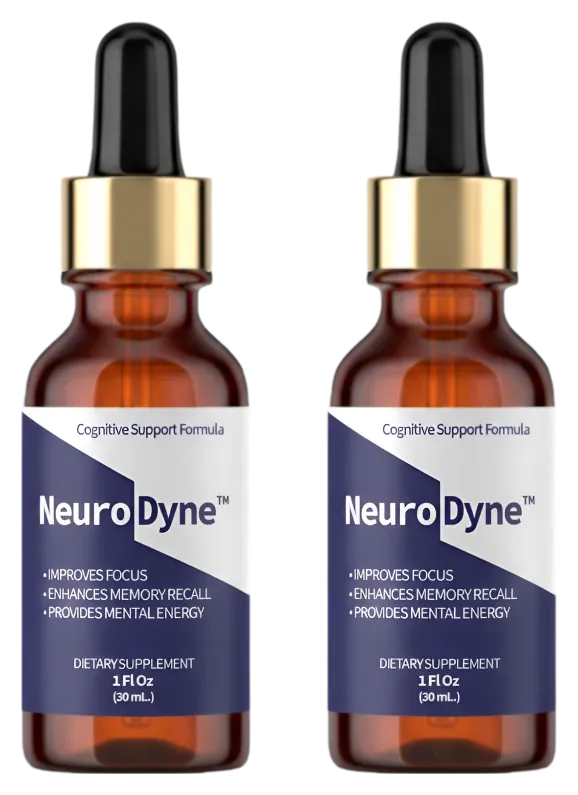
Worked example: NeuroDyne's bottle says improves focus, enhances memory recall and provides mental energy. It is not a treatment for dementia or ADHD.
Check 2: Does the label show the amount of every ingredient?
A real label gives a serving size and an amount per serving. US rules require a Supplement Facts panel (FDA, Labeling guide) (21 CFR 101.36). A proprietary blend may list only one total weight, which hides each herb's share.
Worked example: NeuroDyne's panel is not published online. The sales FAQ lists the three herbs but gives no milligram figures. You would have to read your own bottle.
Check 3: Was this product, or a close equivalent, tested in people?
This is the FTC's test: competent, reliable science behind each health claim, chiefly human trials of the product or a formula that matches it (FTC, Health claims). A study of one herb does not prove a mixed formula works, because dose and form matter.
Worked example: no study of NeuroDyne has been published. Its reference list points to studies of other herbs.
Check 4: What does the research on the ingredients say?
Look up each ingredient, not the brand. Then match the study dose to the label dose. Here is the worked example.
| Herb | What studies gave people | What they found |
|---|---|---|
| Bacopa | 300-450 mg a day for 12 weeks or more (StatPearls, Bacopa) | Small gains in attention speed (Kongkeaw et al., 2014) |
| Ginkgo | 240 mg a day for a median of 6.1 years (DeKosky et al., 2008) | No effect on dementia |
| Lion's mane | 1,050 mg up to near 3 g daily, in small trials (Mori et al., 2009) | Mixed results; gains faded after stopping in one trial |
So the honest answer to “do brain supplements work?” is that some ingredients show small effects, over weeks to months, at known doses. Others, such as ginkgo in its largest trial, show nothing.
Check 5: Is it safe for your medicines and your health?
Safe depends on you. Ginkgo can add to bleeding risk alongside a blood thinner like warfarin (NCCIH, Ginkgo). Lion's mane is a mushroom, so avoid it with a mushroom allergy (MSKCC, Lion's mane). Bacopa can loosen stools and cause nausea.
Check with your doctor or pharmacist before you start if you use a blood thinner or aspirin, take a seizure, diabetes, mood or memory drug, or are expecting or nursing. Show them the bottle. The product is sold for adults 18 and over.
Check 6: Is the proof a trial, or only reviews and ratings?
Stories are not trials. A review shows one person's month. A trial compares a group on the product with a group on placebo, so it can separate the product from sleep, mood and chance.
The FTC bans fake and AI-generated reviews and testimonials (FTC, Fake reviews rule). On this site, no NeuroDyne review has been verified, so we show no stars, count or quotes. Be cautious with any product page that does the opposite without saying how it checked.
Check 7: Have you ruled out the common, fixable causes first?
Do this before you buy. Low vitamin B12, medicines, alcohol, depression, stroke and dementia all appear on MedlinePlus's list of reasons for memory loss (MedlinePlus, Memory loss). Short sleep also blunts focus. Several of these can be treated.
A B12 shortage can lead to memory and thinking problems, and metformin or acid reducers can drain B12 (NIH ODS, Vitamin B12). NCCIH says a supplement should never be the reason you postpone a provider visit (NCCIH, 7 things).
Abrupt confusion, speech trouble, or a drooping face or limb needs a 911 call, not a trial of any product.
How does NeuroDyne score on all seven checks?
| Check | What to ask | NeuroDyne's published answer |
|---|---|---|
| 1 | Structure or disease claim? | Structure-function claims only |
| 2 | Amounts on the label? | Not published online; read your bottle |
| 3 | Tested in people? | No study of the product |
| 4 | Ingredient research? | Three herbs; small or mixed results |
| 5 | Safe with your medicines? | Ask your doctor; ginkgo and blood thinners |
| 6 | Trials or reviews? | No verified reviews on this site |
| 7 | Fixable causes ruled out? | Up to you and your doctor |
It earns mixed marks. It is honest in its claims and thin on proof.
Which sources back this article?
- Questions and Answers on Dietary Supplements. U.S. Food and Drug Administration, 2026.The FDA has no authority to approve supplements before they reach the market.
- Unproven Alzheimer's Disease Products. U.S. Food and Drug Administration, 2018.Warning letters named more than 58 products, and such products may delay a proper diagnosis.
- Dietary Supplement Labeling Guide: Chapter IV. Nutrition Labeling. U.S. Food and Drug Administration, 2005.Every supplement carries a Supplement Facts panel. A proprietary blend lists only its total weight.
- 21 CFR 101.36: Nutrition labeling of dietary supplements. Electronic Code of Federal Regulations, 2026.Sets out the serving size, the amount per serving and how blends are listed.
- Health Products Compliance Guidance. Federal Trade Commission, 2022.Health claims should rest on competent and reliable science, usually human trials of the product or an equivalent formula.
- Bacopa monnieri. Walker EA, Pellegrini MV. StatPearls (NCBI Bookshelf), 2023.Adult extract dose of 300-450 mg a day. Common side effects were more frequent stools, nausea and cramps.
- Meta-analysis of randomized controlled trials on cognitive effects of Bacopa monnieri extract. Journal of Ethnopharmacology (via Epistemonikos), 2014.Nine trials with 518 people, each 12 weeks or longer. Small gains in speed of attention.
- Ginkgo biloba did not prevent dementia or Alzheimer disease in elderly people (summary of the GEM trial). Evidence-Based Nursing 12(2):56, summarizing JAMA 2008;300:2253, 2009.3,069 adults aged 75 and over took ginkgo or placebo for a median of 6.1 years. No difference in dementia.
- Improving effects of Hericium erinaceus on mild cognitive impairment: a double-blind placebo-controlled trial. Mori K, et al. Phytotherapy Research 23(3):367-372 (via FAO Agris), 2009.Test scores rose over 16 weeks, then fell 4 weeks after the capsules stopped.
- Ginkgo: Usefulness and Safety. National Center for Complementary and Integrative Health, 2025.Large studies did not show a lower dementia risk. Ginkgo may raise bleeding risk with blood thinners such as warfarin.
- Lion's Mane Mushroom. Memorial Sloan Kettering Cancer Center, 2024.Avoid it with a mushroom allergy. Nausea and skin rash have been reported.
- Federal Trade Commission Announces Final Rule Banning Fake Reviews and Testimonials. Federal Trade Commission, 2024.Bans fake and AI-generated reviews and testimonials and allows civil penalties.
- Memory loss. MedlinePlus Medical Encyclopedia, 2025.Causes range from low B12, medicines and alcohol to depression, stroke and dementia.
- Vitamin B12: Fact Sheet for Health Professionals. NIH Office of Dietary Supplements, 2025.Low B12 can cause memory and thinking problems. Metformin and acid reducers can lower B12.
- 7 Things To Know About Dietary Supplements for Cognitive Function. National Center for Complementary and Integrative Health, 2024.No conclusive evidence ginkgo slows cognitive decline. A supplement is no reason to delay seeing a provider.
Product, price, guarantee and contact facts come from the bottle images, the sales page (checked October 11, 2026) and this site's own pages. Anything not published there is marked as not published.
Who wrote this
Who wrote and reviewed this page?
Plain-language pages built from the bottle images, the sales page and linked public health sources such as NIH, FDA and Cochrane.
Page revised . Read our editorial standards and the way we check reviews. This website is run by Neurodynesupport, a U.S. stocking partner for NeuroDyne, not by the manufacturer. We are paid a commission when you buy through our order links.
Frequently asked questions
Do brain supplements work?
Some ingredients show small effects in some studies, and others show none. Look for human trials of the product, amounts on the label and claims limited to support, not disease treatment.
Do memory supplements really help?
The research on well-known herbs is small or mixed. Bacopa trials of 12 weeks or more found slight gains in attention speed, while the largest ginkgo trial found no effect on dementia. A supplement is not a treatment for memory loss.
Are brain supplements safe?
It depends on the ingredients, the dose and your medicines. Ginkgo can add to bleeding risk with blood thinners, and mushroom ingredients are a problem for anyone with a mushroom allergy. Ask your doctor or pharmacist first.
Are brain supplements a scam?
Not all of them, but warning signs are common. Look for disease claims, no Supplement Facts panel, studies of other ingredients and ratings you cannot trace to buyers. NeuroDyne's own checks are in the table above.
What is a good memory supplement?
We do not rank products. A good one shows a full label, amounts near studied doses and plain claims, and it does not delay a doctor's visit. Ask your doctor what fits your health and medicines.
Should I see a doctor before taking a focus supplement?
Yes, if your memory trouble is new, getting worse or worrying your family, and before you start if you take daily medicine. Several common causes, such as low B12 and medicine effects, can be treated.
Does the NeuroDyne formula have a study behind it?
No study of NeuroDyne itself has been published that we could find. Its three named herbs, ginkgo biloba, Bacopa monnieri and lion's mane, have been tested alone with small or mixed results.
How can I check a memory supplement like NeuroDyne before buying?
Look for a Supplement Facts panel with amounts, a named maker, and human studies of the product or the same formula. For NeuroDyne, the amounts are not published, so ask the maker before you order.
Our view
The question is wider than any one brand, and the answer is plain. Brain supplements are not magic, and they are not all empty. Some herbs have small, slow effects at specific doses. Claims often run ahead of the evidence.
The seven checks are a way to slow your own spending. They reward products that show their amounts and do not promise to treat disease. NeuroDyne passes some and misses others, and we have tried to show both columns.
Whatever you pick, put sleep, movement and a doctor visit ahead of it. A bottle is an extra, not a plan.
Last updated November 11, 2026. Medically reviewed October 16, 2026 by Dr. Kellyann Niotis, MD, Physician.