 U.S. stocking partner
Guides
NeuroDyne Guides: Where to Start on Memory, Focus and Supplements
Start with the memory and focus guide if you want to know what helps recall and attention day to day. Read the choosing guide if you are comparing bottles. Both run about 10 minutes, link every study, and say plainly that no NeuroDyne amount or product study is published. The blog covers single questions in more depth.
Written by the NeuroDyne editorial teamUpdated
Pick a guide
Which NeuroDyne guide should you read first?
Match the guide to the question in your head. Each one stands alone.
Memory and focus guide
For readers who lose names, words or the thread of a meeting. It covers sleep, movement, medicines that blur recall, and where the three named herbs fit. Read the memory and focus guide.
Choosing a memory supplement
For readers holding two bottles and a credit card. It turns the label, the study doses and the refund terms into a short checklist. Open how to choose a memory supplement.
The blog
For one narrow question at a time: how long bacopa takes, what the ginkgo GEM trial found, what causes brain fog. Browse the Neurodynesupport blog.
Question map
What question does each guide answer?
Find your question in the left column. The middle column names the place that answers it.
| Your question | Best place to read | Short answer |
|---|---|---|
| Why do I forget names more than I used to? | Memory and focus guide | Sleep, stress, medicines and low B12 are common reasons. A doctor can check the cause. |
| Can a supplement fix afternoon fog? | Memory and focus guide | Evidence for any herb is small. Habits move the needle more. |
| How do I compare two memory bottles? | Choosing guide | Look for a Supplement Facts panel, amounts and a study dose match. |
| How much ginkgo, bacopa or lion's mane is in NeuroDyne? | Choosing guide | Not published. The sales page and our images show no amounts. |
| How long does bacopa take? | Blog | Trials ran 12 weeks or more. |
| Does ginkgo protect older adults from dementia? | Blog | No. The GEM trial in 3,069 adults found no difference. |
| Is a liquid better than a capsule? | Blog | Not shown. Studies used capsules or tablets. |
Ground rules
What facts do all the guides start from?
Every guide uses the same short list of known facts. Nothing outside it is assumed.
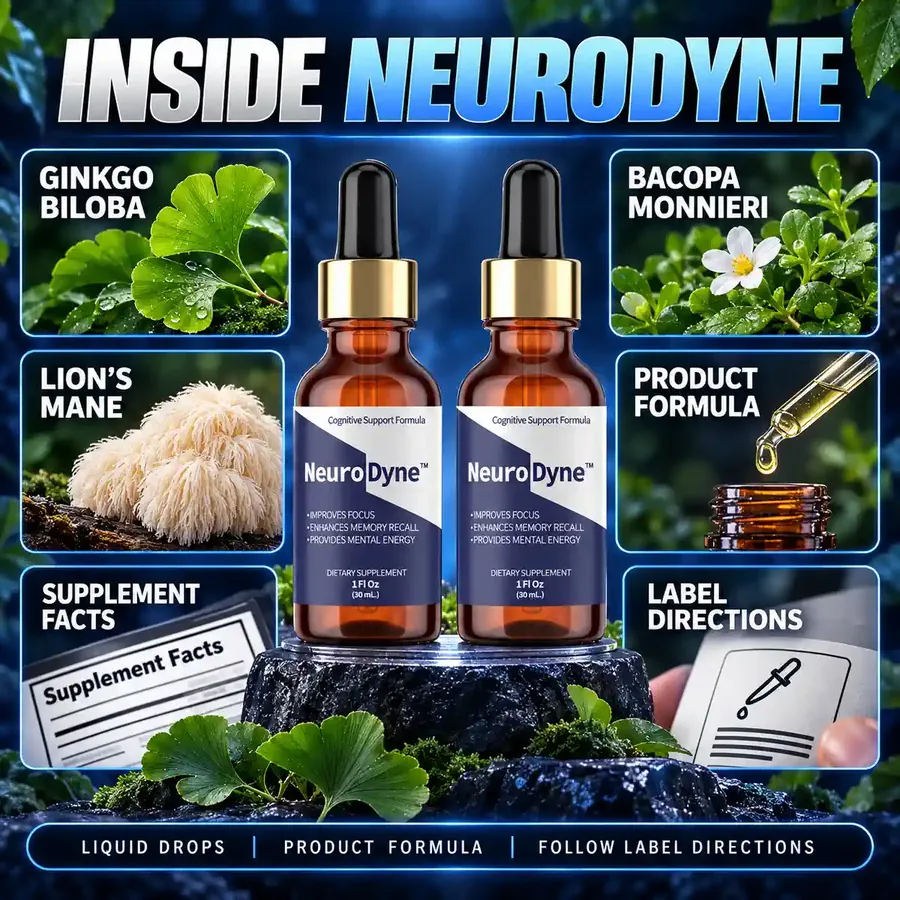
NeuroDyne is a liquid-drop dietary supplement in a 1 fl oz (30 mL) dropper bottle. One bottle lasts about 30 days, says the sales FAQ. The named ingredients are ginkgo biloba, Bacopa monnieri and lion's mane mushroom.
- No Supplement Facts panel is shown in any image or on the sales page we checked on October 11, 2026.
- No amount per serving is published for any of the three herbs.
- No clinical trial of NeuroDyne itself has been published.
- The research behind each herb used that herb alone, mostly as capsules or tablets.
- The bottle front claims focus, memory recall and mental energy. Those are the maker's words.
Evidence at a glance
How strong is the evidence behind each herb?
Longer bars mean the research speaks more directly to memory or focus in people.
- BacopaNine trials, 12+ weeks each
Small gains in attention speed at 300-450 mg a day. (Kongkeaw et al., 2014)
- Lion's maneSmall trials of 30-49 people
Mixed results; gains faded after stopping in one trial. (LiverTox, Lion's mane)
- GinkgoThe GEM trial: 3,069 adults
Did not prevent memory decline or dementia over about 6 years. (DeKosky et al., 2008)
- NeuroDyneNever studied as a product
No trial of NeuroDyne, and no published amounts to compare. (FTC, Health claims)
The longer the bar, the more directly that evidence answers the question: will this bottle help my memory or focus? It sums up the linked sources in our own judgment; it is not a score from any study.
From the blog
What does the blog cover that the guides do not?
The guides give the wide view. Each blog article narrows to one study or one problem.
How long bacopa takes
Nine trials with 518 people all lasted at least 12 weeks. Gains were small and limited to speed of attention (Kongkeaw et al., 2014).
The GEM trial, read slowly
Dementia showed up in 17.9% on ginkgo and 16.1% on placebo after a median 6.1 years (GEM trial results, 2008).
What the small trials found
Three trials of 30 to 49 people gave mixed results. In one, gains faded 4 weeks after stopping (Mori et al., 2009).
Common causes worth checking
Low B12, medicines, alcohol, depression and poor sleep can all blur thinking (MedlinePlus, Memory loss).
Liquid or capsule?
A 30 mL bottle must hold a month of servings. That limits how much herb each dropper can carry.
Red flags in memory ads
Badges, testimonials and promises of fast results. The FDA has warned sellers of more than 58 Alzheimer's products (FDA, Unproven Alzheimer's products).
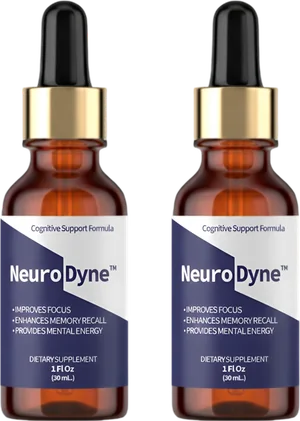
Try NeuroDyne with 60 days to decide1 fl oz dropper bottle · from $49 a bottle on 6 · free U.S. shipping on 3 or 6
Order nowReal situations
Which guide fits your situation?
Three common readers, and the order we would suggest each one reads in.
The busy manager
A 58-year-old project manager loses names in meetings and feels flat by 3 pm. Start with the memory and focus guide. Sleep and meeting habits come first; herbs are a footnote.
The daughter buying for a parent
A 66-year-old mother takes warfarin. Her daughter wants to buy drops for her. Read the choosing guide, then take the bottle to the mother's doctor, because ginkgo may add to bleeding risk (NCCIH, Ginkgo).
The careful comparer
A 47-year-old has three tabs open with three memory products. Read the choosing guide and score each bottle. A bottle with no amounts cannot be matched to a study dose.
Sudden confusion, trouble speaking, a drooping face or weakness on one side needs 911, not a guide.
How we write them
How are the guides checked before they go live?
Plain answer first, then the number, then the source.
Each claim in a guide must trace to one of three places: the bottle images, the sales page, or a public source such as NIH, FDA or Cochrane. When none of those says something, the guide says it is not published.
Source first
We read the study or agency page before writing a sentence about it. The link sits next to the claim.
Numbers kept
Trial size, dose and length stay in the text. "Studies show" with no number is not allowed.
Gaps named
Missing amounts, missing directions and missing trials are stated, not filled in.
Dates moved
When a fact changes, we correct it and update the date at the top.
Our full rules are on the editorial standards page. Neurodynesupport is a U.S. stocking partner for NeuroDyne, not the maker, and earns money when you order through its links.
After reading
What should you do once you finish a guide?
Write down the one memory problem that bothers you most. Bring that note and any bottle you are considering to your next checkup. If you do try NeuroDyne, follow the dropper amount printed on your bottle and keep a weekly note, so you can judge it inside the 60-day refund window.
Tracking and refunds for placed orders go to the order desk at +1 (302) 200-3480. Questions about a guide go to [email protected], which cannot see orders.
FAQ
Questions about the NeuroDyne guides
Is there a NeuroDyne guide for memory loss?
Yes. The memory and focus guide covers everyday forgetfulness, common causes a doctor can check, and where ginkgo, bacopa and lion's mane fit. It does not treat or diagnose memory loss, and new or worsening memory trouble should be checked by a doctor.
How do I choose between memory supplements?
Check four things on each bottle: a Supplement Facts panel, the amount of each herb, whether those amounts match study doses, and the refund terms. The choosing guide turns this into a short scorecard you can fill in for any brand.
Do the NeuroDyne guides say how much of each herb is inside?
No, because that number is not public. Neither the sales page nor the bottle images we have show a Supplement Facts panel or any amount, so every guide says not published rather than guessing.
Are the guides written by the company that makes NeuroDyne?
No. Neurodynesupport, a U.S. stocking partner for NeuroDyne, writes them. Per the sales page, NeuroDyne Research makes it. We earn money when readers order through our links, and we say so on every guide.
Where can I read about the ginkgo dementia study?
The blog has an article on the GEM trial. In short, 3,069 adults aged 75 and over took ginkgo or placebo for a median 6.1 years, and ginkgo did not lower dementia rates.
Which guide should I read if I am buying drops for a parent?
Read the choosing guide first, then show the bottle to your parent's doctor. Ginkgo may raise bleeding risk with blood thinners, and older adults often take several medicines that need checking together.
How often are the NeuroDyne guides updated?
We update a guide when a source changes or a reader reports an error. The date at the top shows the last change. The current versions were checked on October 11, 2026.
Who wrote this
Written and reviewed by
Plain-language pages built from the bottle images, the sales page and linked public health sources such as NIH, FDA and Cochrane.
Page revised . Read our editorial standards and the way we check reviews. This website is run by Neurodynesupport, a U.S. stocking partner for NeuroDyne, not by the manufacturer. We are paid a commission when you buy through our order links.
Keep reading
More about NeuroDyne
Ingredients
Ginkgo, bacopa and lion's mane are named. The amounts are not. Each herb next to the doses studies used.
Read more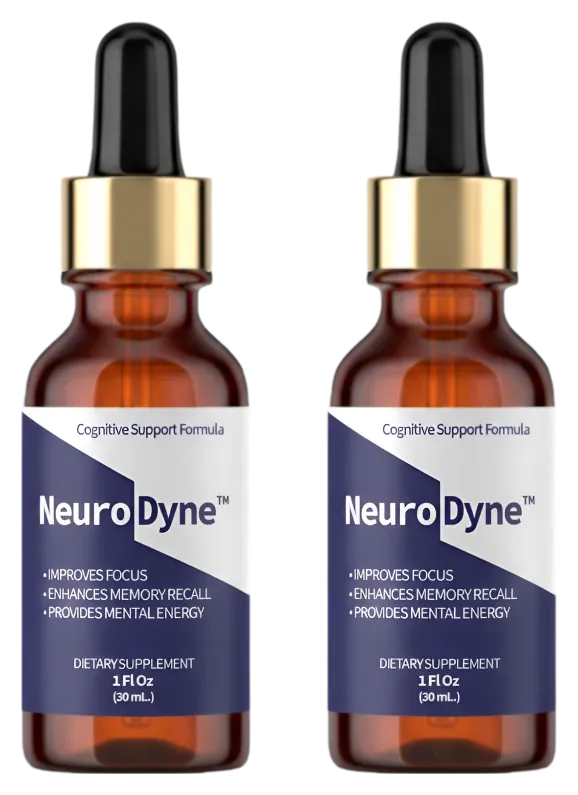
Supplement Facts
The NeuroDyne front label typed out, the three named herbs, and the panel details that are still missing.
Read more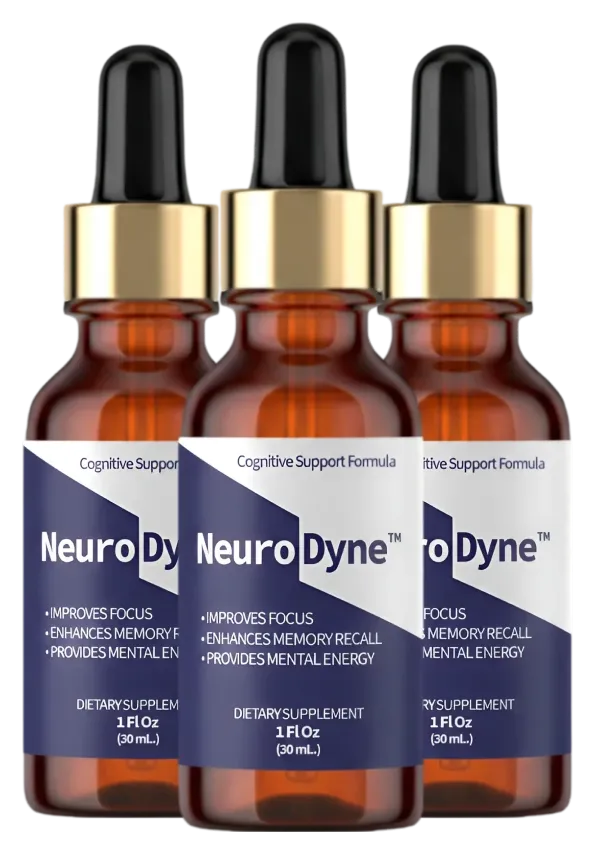
Side effects
Stomach upset, bleeding risk and mushroom allergy: what NeuroDyne's three herbs can cause and who should check first.
Read moreU.S. stocking partner for NeuroDyne
Ready to try NeuroDyne?
Pick a pack. Check your bottle's directions first; each pack lasts through the full 60-day window.
- Secure checkout
- 60-day money-back window
- Tracking in the order email