 U.S. stocking partner
Guide
Memory and Focus Guide: What Helps, What to Check, and Where NeuroDyne Fits
Most everyday memory slips come from short sleep, stress, busy days or medicines, and some come from treatable problems such as low B12 or depression. Habits help most. NeuroDyne names three herbs with small or mixed evidence: bacopa showed small gains in attention speed after 12 weeks, ginkgo did not prevent dementia, and no study of NeuroDyne exists.
Written by the NeuroDyne editorial teamUpdated
Start here
Is it normal to forget more after 40?
Some slips are common. A pattern that grows or worries family deserves a checkup.
Walking into a room and forgetting why is common at any age. So is losing a word that comes back an hour later. Those slips tend to cluster on days with poor sleep, heavy stress or too many tasks at once.
A different pattern needs a doctor. Getting lost on a familiar route, repeating the same question within minutes, or trouble with bills you used to handle are signs to book a visit. MedlinePlus lists low B12, medicines, alcohol, depression, stroke and dementia among the causes of memory loss, and says a provider should check which one applies (MedlinePlus, Memory loss).
Treatable causes
What causes memory trouble that a doctor can fix?
Several common causes respond to treatment. A supplement can hide them by delaying the visit.
| Cause | How it can show up | What to ask your doctor |
|---|---|---|
| Low vitamin B12 | Memory and thinking problems, numbness or tingling (NIH ODS, Vitamin B12) | "Should my B12 be tested? I take metformin or an acid reducer." |
| Medicines | Fog after a new prescription or a dose change (MedlinePlus, Memory loss) | "Could any of my medicines affect memory?" |
| Alcohol | Gaps in recall, poor focus the next day (MedlinePlus, Memory loss) | "How much is too much for my age and health?" |
| Depression | Slow thinking, low energy, trouble starting tasks (MedlinePlus, Memory loss) | "Could my mood explain this?" |
| Stroke | Sudden confusion, speech trouble, weakness (MedlinePlus, Memory loss) | Call 911. Do not wait for an appointment. |
| Short sleep | Afternoon fog, lost words, slow reactions | "Could I have a sleep problem such as apnea?" |
A day that helps
What daily habits support memory and focus?
Sleep and movement do more for recall than any herb on a label. The dial shows one realistic day.
- Morning, about 8:00
Many people choose the morning. Use the amount printed on your bottle.
- Or with lunch
Lunch works if mornings are rushed. A single daily time is easy to keep track of.
- Afternoon walk
Regular activity does more for brain health than any herb.
- 7+ hours of sleep
Too little sleep blunts memory and focus. A supplement cannot replace it.
Timing is a suggestion; follow your bottle. If memory problems worry you, see a doctor (MedlinePlus, Memory loss).
Protect sleep
Keep the same bedtime on weekends. Short nights show up the next afternoon as lost words and slow focus.
Move daily
A brisk walk after lunch is a free alternative to a second coffee in the 3 pm slump.
Write it down
A notebook or phone list frees working memory. Saying a new name back once is a simple habit to try.
Energy
Does caffeine help focus, and how much is too much?
Caffeine sharpens alertness for a few hours. Healthy adults can usually take up to 400 mg a day.
The FDA says up to 400 mg of caffeine a day is not generally linked to harm in healthy adults (FDA, Caffeine). That limit counts coffee, tea, soda and energy drinks together. People who are sensitive, pregnant or on certain medicines may need less.
The NeuroDyne bottle says it "provides mental energy". None of its three named herbs is a stimulant. Any lift you notice is unlikely to feel like coffee. Because no full ingredient list is published, you cannot confirm from the sales page that nothing else is inside, so ask the maker if you avoid caffeine.
The three herbs
Where do ginkgo, bacopa and lion's mane fit?
Each herb was studied alone, at set daily amounts, for weeks or years. NeuroDyne's amounts are not published.
Study doses come from the linked trials (StatPearls, Bacopa) (DeKosky et al., 2008) (Mori et al., 2009) (Li et al., 2020). With no published amounts, NeuroDyne cannot go on either chart. Those studies tested single-ingredient capsules or tablets, not a mixed liquid.
Bacopa
A review of 9 trials with 518 people found small gains in speed of attention, all after 12 weeks or more (Kongkeaw et al., 2014). Study doses were 300 to 450 mg of extract a day (StatPearls, Bacopa). Read the bacopa profile.
Ginkgo
In the GEM trial, 3,069 adults aged 75 and over took 120 mg twice daily for a median 6.1 years. Ginkgo did not lower dementia rates (DeKosky et al., 2008). See the ginkgo profile.
Lion's mane
Trials were small. In one with 30 adults, scores rose over 16 weeks and fell 4 weeks after stopping (Mori et al., 2009). Another with 41 young adults found mostly no change (Docherty et al., 2023). More on the lion's mane page.
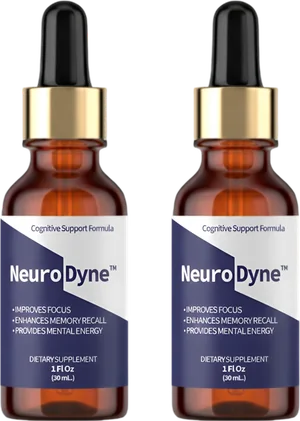
Try NeuroDyne with 60 days to decide1 fl oz dropper bottle · from $49 a bottle on 6 · free U.S. shipping on 3 or 6
Order nowReading the bottle
What can the NeuroDyne label tell you, and what is missing?
The front label lists three claims and a size. The rest is not shown in any image we have.
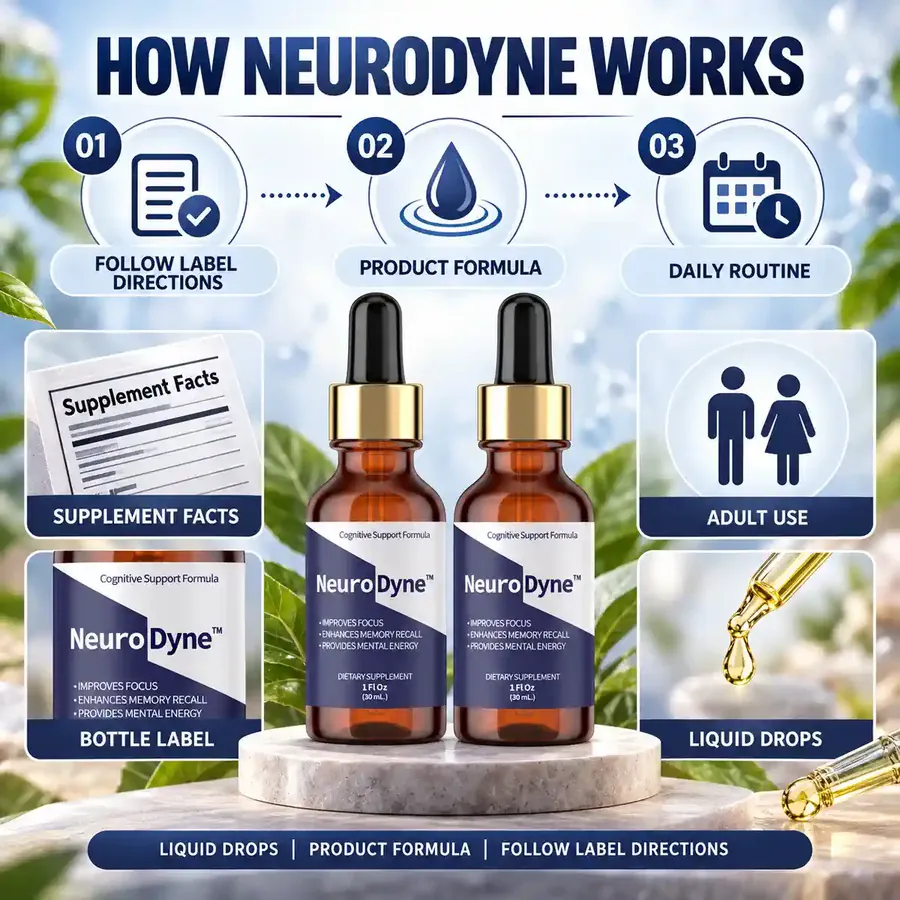
The bottle front reads: "Cognitive Support Formula · NeuroDyne™ · Improves focus · Enhances memory recall · Provides mental energy · Dietary supplement · 1 Fl Oz (30 mL.)". Those claims are the maker's, not test results. Mental clarity and less brain fog are added on the sales page.
What you can confirm
- Liquid drops in a 1 fl oz (30 mL) bottle
- About 30 days per bottle, per the sales FAQ
- Three named herbs
- A 60-day money-back window on the sales page
What you cannot confirm yet
- Amount of each herb per serving
- Serving size and directions
- Whether the base is alcohol or glycerin
- Any study of the finished product
Our label and supplement facts page types out every readable word. Until the panel is published, follow the dropper amount printed on your bottle.
Safety
Who should talk to a doctor before trying memory drops?
Most cautions trace to ginkgo and to lion's mane being a mushroom.
- Anyone on blood thinners or daily aspirin, or with surgery planned. With drugs such as warfarin, ginkgo may raise bleeding risk (NCCIH, Ginkgo).
- Anyone on seizure, diabetes, mood or memory medicine.
- Anyone allergic to mushrooms, because lion's mane is one (MSKCC, Lion's mane).
- Anyone pregnant or nursing, and anyone under 18.
Sudden confusion, trouble speaking, a drooping face or weakness on one side: call 911 right away.
If you try it
How can you judge a memory supplement fairly?
Pick one measure, keep notes weekly, and decide before the refund window closes.
- Before day 1
Write down one problem to track, such as names lost in meetings each week. Check the cautions above with your doctor.
- Weeks 1-4
Follow the dropper amount printed on your bottle at the same time each day. Note sleep hours too, since they change focus on their own.
- Weeks 5-8
Compare your notes with week one. The 60-day refund window on the sales page ends around here, so decide by about day 45.
- Week 12
Bacopa trials ran at least this long (Kongkeaw et al., 2014). If nothing changed by now, the bottle is unlikely to help you.
Comparing NeuroDyne with other bottles? The guide to choosing a memory supplement has a scorecard for that.
FAQ
Memory and focus questions people ask
What is the best way to improve memory after 50?
Regular sleep, daily movement and treating health problems such as low B12 or depression have the most support. Supplements play a small role at best, and no study of NeuroDyne exists. A doctor can check whether a medicine or condition is behind the change.
Can low B12 cause memory problems?
Yes. The NIH Office of Dietary Supplements lists memory and thinking problems among the signs of low B12. Metformin and acid reducers can lower B12 over time, so ask about a blood test if you take either.
Does NeuroDyne help with brain fog?
The sales page claims less brain fog, but no study of NeuroDyne has been published. Its herbs have small or mixed evidence. Ongoing fog has causes worth checking first, such as poor sleep, medicines, low B12 or low mood.
Is bacopa or ginkgo better for focus?
Bacopa has the stronger signal for attention: 9 trials found small gains in speed of attention after 12 weeks or more. Ginkgo did not prevent decline in a large trial of older adults. Neither result tells you what NeuroDyne's undisclosed amounts can do.
Does NeuroDyne contain caffeine?
None of the three named ingredients is a stimulant, and caffeine is not listed in the sales FAQ. The full ingredient list is not published, so ask the maker at [email protected] if you need to avoid caffeine completely.
How long should I try a memory supplement before deciding?
Bacopa trials ran 12 weeks or more, yet the NeuroDyne refund window is 60 days. Keep weekly notes from day one and decide by about day 45, so there is time to arrange a return if it is not working for you.
When is forgetfulness a sign of something serious?
Repeating questions, getting lost on familiar routes, or trouble with tasks you used to manage deserve a doctor's visit. Sudden confusion, trouble speaking or one-sided weakness needs 911 straight away.
Who wrote this
Written and reviewed by
Plain-language pages built from the bottle images, the sales page and linked public health sources such as NIH, FDA and Cochrane.
Page revised . Read our editorial standards and the way we check reviews. This website is run by Neurodynesupport, a U.S. stocking partner for NeuroDyne, not by the manufacturer. We are paid a commission when you buy through our order links.
Keep reading
More about NeuroDyne
Choosing a memory supplement
A seven-point label scorecard you can use on any memory bottle, with NeuroDyne scored honestly.
Read more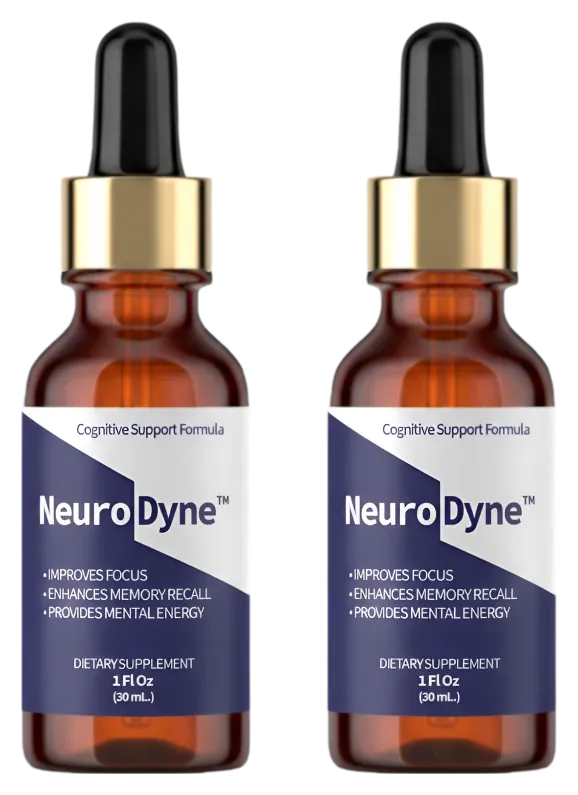
Results timeline
Why any change would take weeks, how study lengths compare, and how the 60-day window fits in.
Read more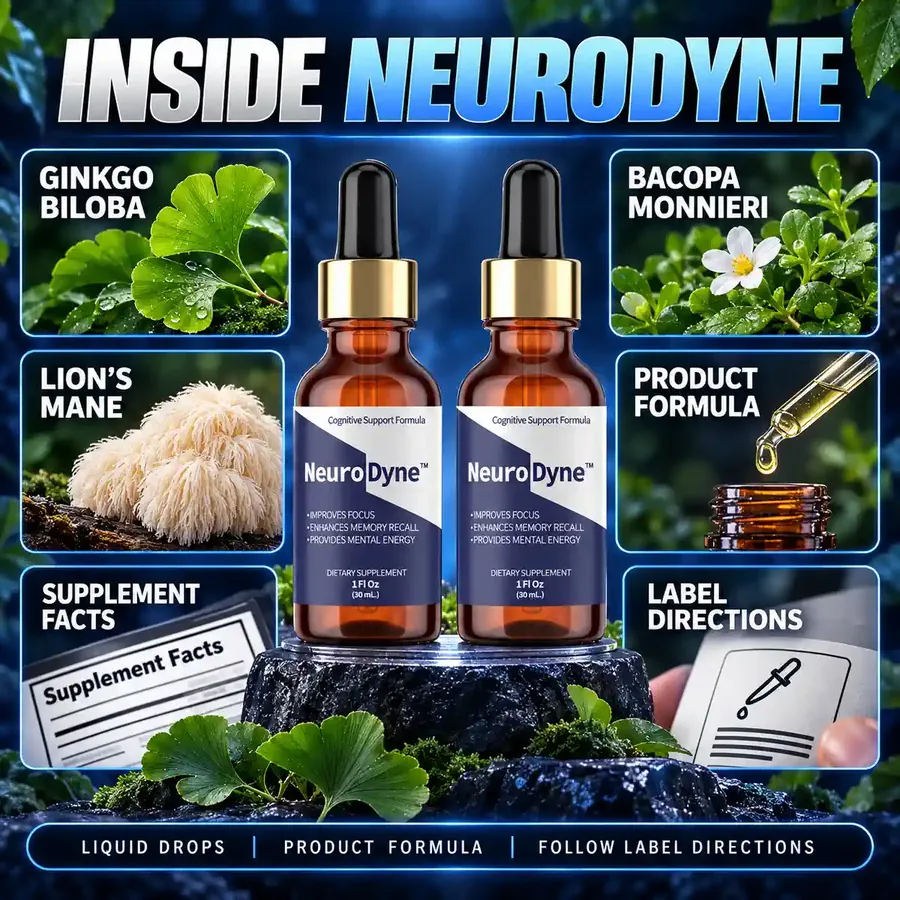
Who it's for
A quick fit check, the situations that call for a doctor first, and tips for buying for a parent.
Read moreU.S. stocking partner for NeuroDyne
Ready to try NeuroDyne?
Pick a pack. Check your bottle's directions first; each pack lasts through the full 60-day window.
- Secure checkout
- 60-day money-back window
- Tracking in the order email