U.S. stocking partner
Evidence check
Do NeuroDyne Drops Work for Memory? A 7-Point Look at the Evidence
Nobody can say yes or no yet, because no study of NeuroDyne has been published. Its three named herbs, tested alone, show small gains in attention speed for bacopa, no memory protection for ginkgo and mixed results for lion's mane. Seven checks below help you judge the claims yourself.
Written by the NeuroDyne editorial team · Medically reviewed by Dr. Kellyann Niotis, MD, PhysicianReviewed · Updated · 10 min read
What are the key facts at a glance?
Key facts
- Three claims sit on the bottle (focus, recall, energy), and the sales page goes further with mental clarity and a lighter fog.
- No clinical study of NeuroDyne has been published.
- Bacopa: nine trials of at least 12 weeks; a slight attention-speed gain at 300-450 mg daily.
- Ginkgo: the GEM trial followed 3,069 adults, all 75 or older, and saw no effect on dementia.
- Lion's mane: three small trials, 30 to 49 people each, with mixed results.
- NeuroDyne's amounts are not published, so the study doses cannot be matched to it.
NeuroDyne is a dietary supplement. It is not FDA approved, and no supplement is. It is not meant to diagnose, treat, cure or prevent any disease. Take medical questions to your doctor or pharmacist.
Check 1: What does NeuroDyne actually claim?
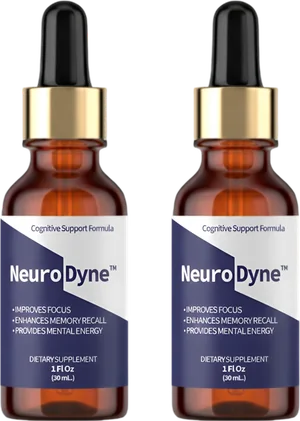
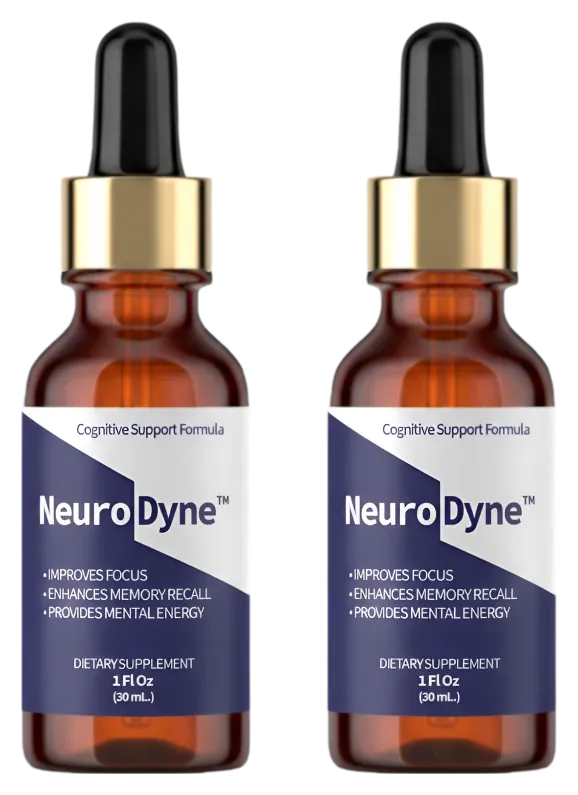
Start with the exact words. The bottle front says the formula improves focus, enhances memory recall and provides mental energy. The sales page widens the list to memory, focus, mental clarity and less brain fog.
These are called structure-function claims. The FDA does not review them before a product is sold (FDA, Supplement Q&A). The brand does not claim to treat dementia or ADHD, and a supplement cannot make that claim.
The answer to Your results page for the question “what is NeuroDyne for?” is short.ldquo;what is NeuroDyne for?Your results page for the question “what is NeuroDyne for?” is short.rdquo; is short. It is sold to adults 18 and over as a memory, focus and mental energy supplement. That is all the sources say.
Check 2: Has NeuroDyne itself ever been tested?
No. Nobody has published a study of the drops. The FTC looks for competent, reliable science behind a health claim, most often human trials of the product, or of an equivalent (FTC, Health claims). For NeuroDyne, neither is public.
That does not prove the drops do nothing. It means the claims cannot be checked. Anyone who says “clinically proven” about NeuroDyne is pointing at studies of something else. Its sales page also leans on studies of other herbs rather than these three.
Check 3: What did the bacopa trials find?
This is the best-supported herb of the three, and the support is small. A review pooled 9 trials with 518 people. Every trial ran 12 weeks or longer, and speed of attention improved slightly (Kongkeaw et al., 2014). Adults took 300-450 mg of extract a day (StatPearls, Bacopa).
Memory results were less steady. A single 12-week trial using 300 mg reported better delayed word recall. The most common side effects were looser stools, nausea and cramps.
Check 4: What did the ginkgo trial find?
The biggest ginkgo trial was negative. The GEM trial enrolled 3,069 people aged 75 or more. They took 120 mg of ginkgo twice daily or a placebo (DeKosky et al., 2008). Dementia rates over a median of 6.1 years were 17.9% with ginkgo and 16.1% with placebo.
Pooling 36 ginkgo trials, a Cochrane review judged the evidence for benefit inconsistent and unreliable (Cochrane, Ginkgo 2009). NCCIH could find no conclusive proof that ginkgo slows memory decline (NCCIH, 7 things).
Check 5: What did the lion's mane trials find?
Small trials, mixed answers. Here are the three that the sources describe.
| Trial | Length | Amount taken each day | Who took part | Outcome |
|---|---|---|---|---|
| Mori 2009 (Mori et al., 2009) | 16 weeks | About 3 g | 30 adults, ages 50 to 80, living with mild cognitive impairment | Scores climbed, then dropped once the capsules stopped |
| Docherty 2023 (Docherty et al., 2023) | 28 days | 1.8 g | 41 healthy young adults | Most measures stayed flat |
| Li 2020 (Li et al., 2020) | 49 weeks | 1,050 mg | 49 people | No difference on the main memory scores |
| NeuroDyne | No study | Not published | None | Unknown |
None of the trials set out to measure brain fog. The sales page promises less of it, yet the studies tracked test scores.
Check 6: Do the amounts line up with the studies?
This is the check nobody can finish. The studies gave set daily doses. NeuroDyne publishes no amount per serving, no serving size and no base liquid.
Per the sales FAQ, a 30 mL bottle runs about 30 days, which averages near 1 mL daily by our own sum. It is hard to know how much of three herbs fits in that, so you cannot tell whether NeuroDyne is near, below or above any study dose. Only the back panel of your bottle can tell you.
Read the panel when the bottle arrives. Compare each herb's milligrams with the study doses in this article. If the panel shows one blend total, you cannot compare them at all.
Check 7: How could you test it fairly yourself?
A fair test is slow, written and honest. People often ask for NeuroDyne before and after photos or “results”. None are published here, and a photo cannot show memory anyway.
Write a starting score
In week 1, count missed names or lost words on one typical day and rate afternoon fog from 1 to 5.
Keep everything else steady
Track sleep, caffeine and alcohol. They move focus more than any herb.
Use the label amount
Do not raise it if you notice nothing. Two quiet weeks are normal.
Decide around day 45
Compare your notes with week 1. The money-back window closes at day 60.
Look again at week 12
Around this point the bacopa trials took their readings, and three bottles last about 90 days.
If gains show up, they are more likely to be small and to take months. In one lion's mane trial the gains had faded 4 weeks after the capsules ended. Any effect probably lasts only while you take the drops.
How does it work, and what is it good for?
No mechanism is published for the product. The brand's graphic shows three steps and no explanation. We will not invent one. What can be said is that three herbs are delivered as liquid drops, and each has a research record that is modest at best.
Memory trouble that is fresh, worsening or alarming to relatives calls for a doctor, not drops. Treatable causes include low B12, medicines, alcohol, depression and stroke (MedlinePlus, Memory loss). Abrupt confusion or speech trouble is an emergency; call 911.
Which sources back this article?
- Questions and Answers on Dietary Supplements. U.S. Food and Drug Administration, 2026.The FDA has no authority to approve supplements before they reach the market.
- Health Products Compliance Guidance. Federal Trade Commission, 2022.Health claims should rest on competent and reliable science, usually human trials of the product or an equivalent formula.
- Meta-analysis of randomized controlled trials on cognitive effects of Bacopa monnieri extract. Journal of Ethnopharmacology (via Epistemonikos), 2014.Nine trials with 518 people, each 12 weeks or longer. Small gains in speed of attention.
- Bacopa monnieri. Walker EA, Pellegrini MV. StatPearls (NCBI Bookshelf), 2023.Adult extract dose of 300-450 mg a day. Common side effects were more frequent stools, nausea and cramps.
- Ginkgo biloba did not prevent dementia or Alzheimer disease in elderly people (summary of the GEM trial). Evidence-Based Nursing 12(2):56, summarizing JAMA 2008;300:2253, 2009.3,069 adults aged 75 and over took ginkgo or placebo for a median of 6.1 years. No difference in dementia.
- Ginkgo biloba for cognitive impairment and dementia. Birks J, Grimley Evans J. Cochrane Database of Systematic Reviews, 2009.A pooled review of 36 ginkgo trials. Benefit was not shown in a consistent, reliable way.
- 7 Things To Know About Dietary Supplements for Cognitive Function. National Center for Complementary and Integrative Health, 2024.No conclusive evidence ginkgo slows cognitive decline. A supplement is no reason to delay seeing a provider.
- Improving effects of Hericium erinaceus on mild cognitive impairment: a double-blind placebo-controlled trial. Mori K, et al. Phytotherapy Research 23(3):367-372 (via FAO Agris), 2009.Test scores rose over 16 weeks, then fell 4 weeks after the capsules stopped.
- The Acute and Chronic Effects of Lion's Mane Mushroom Supplementation on Cognitive Function, Stress and Mood in Young Adults. Docherty S, et al. Nutrients 15(22):4842, 2023.41 healthy adults took 1.8 g a day for 28 days. Most measures did not change.
- Prevention of Early Alzheimer's Disease by Erinacine A-Enriched Hericium erinaceus Mycelia: Pilot Study. Li I-C, et al. Frontiers in Aging Neuroscience 12, 2020.A pilot study of 49 people over 49 weeks at 1,050 mg a day. Main memory scores did not differ.
- Memory loss. MedlinePlus Medical Encyclopedia, 2025.Causes range from low B12, medicines and alcohol to depression, stroke and dementia.
Product, price, guarantee and contact facts come from the bottle images, the sales page (checked October 11, 2026) and this site's own pages. Anything not published there is marked as not published.
Who wrote this
Who wrote and reviewed this page?
Plain-language pages built from the bottle images, the sales page and linked public health sources such as NIH, FDA and Cochrane.
Page revised . Read our editorial standards and the way we check reviews. This website is run by Neurodynesupport, a U.S. stocking partner for NeuroDyne, not by the manufacturer. We are paid a commission when you buy through our order links.
Frequently asked questions
Does NeuroDyne work?
No study of NeuroDyne has been published, so nobody can show that it works. Its herbs, studied alone, gave small gains in attention speed for bacopa, no dementia benefit for ginkgo and mixed results for lion's mane.
Do NeuroDyne drops really work for memory?
That is not proven. The bottle claims to enhance memory recall, but there is no trial of the product and no published amounts to compare with study doses. Judge it with your own notes over several months.
How long does NeuroDyne take to work?
No timeline is published. The bacopa trials ran 12 weeks or longer, so allow two to three months of steady use before you judge. A bottle covers about a month.
Are NeuroDyne drops effective for brain fog?
Less brain fog is a sales-page promise, but no trial measured it. Fog that lingers can have a cause worth a doctor's look, such as low B12, a medicine or poor sleep.
What are NeuroDyne drops used for?
Adults 18 and over are the intended buyers of this supplement, which is sold for memory, focus and mental energy. It does not treat dementia, ADHD or any disease.
Are there NeuroDyne before and after results?
No before and after photos or verified results are published on this site. No customer review has been verified here yet, and a photo cannot show memory.
Do NeuroDyne reviews prove that the drops work?
No. Reviews and testimonials are not trials, and none has been tied to a real order on this site. Without a study of the product, personal stories cannot show that NeuroDyne works.
What can I do to test whether NeuroDyne works for me?
Write a baseline in week one, keep a weekly score and judge at about 12 weeks. The 60-day money-back window gives you time to decide, and one bottle lasts about 30 days.
Our view
The fairest answer is that the evidence is thin and the product is untested. The herbs are real, the research on them is modest, and the amounts in the bottle are unknown. A product can fit that picture and still help one person a little. It can also do nothing.
If you try it, treat it as a small experiment. Write down a starting score, hold your other habits steady and look again at day 45 and week 12. Spend the first decision on your doctor if you take any daily medicine.
Do not let a supplement delay a visit about memory. Trouble that is new or getting worse deserves a proper check first.
Last updated November 11, 2026. Medically reviewed October 16, 2026 by Dr. Kellyann Niotis, MD, Physician.