 U.S. stocking partner
Ingredient evidence
Does Ginkgo Improve Memory? The GEM Trial Result and Neuro Dyne
Ginkgo did not protect memory in the largest trial ever run on it. In the GEM trial, 3,069 adults aged 75 and up took 120 mg twice daily or placebo for a median 6.1 years. Of those on ginkgo, 17.9% developed dementia, against 16.1% on placebo (DeKosky et al., 2008) (GEM trial results, 2008). NeuroDyne names ginkgo but publishes no amount.
Written by the NeuroDyne editorial teamUpdated · 9 min read
Short answer
Does ginkgo biloba improve memory?
The best evidence says no, at least not enough to prevent decline. The GEM trial is the largest test of ginkgo and memory, and ginkgo did not beat placebo (DeKosky et al., 2008).
The National Center for Complementary and Integrative Health reaches the same view. In large studies, ginkgo did not lower the risk of dementia (NCCIH, Ginkgo), and there is no conclusive evidence it slows cognitive decline (NCCIH, 7 things).
Ginkgo is still sold widely for memory. That is legal for supplements, because FDA does not review them for effectiveness before they go on sale (FDA, Using supplements).
The trial
What was the GEM trial?
GEM stands for Ginkgo Evaluation of Memory. It was a placebo-controlled trial published in JAMA in 2008 (DeKosky et al., 2008).
| People | 3,069 adults aged 75 and older |
|---|---|
| Ginkgo dose | 120 mg twice daily (240 mg a day) of extract |
| Comparison | Placebo |
| Length | Median 6.1 years |
| Dementia on ginkgo | 17.9% |
| Dementia on placebo | 16.1% |
| Verdict | No difference in dementia |
Reading the result
What does 17.9% versus 16.1% actually mean?
It means ginkgo did not come out ahead. Scale it to 1,000 people: about 179 on ginkgo and 161 on placebo developed dementia (GEM trial results, 2008).
The researchers judged this gap as no real difference. It does not show that ginkgo causes dementia. It shows that six years of a standard dose gave no protection.
A trial with thousands of people over years is far harder to fool than a 30-person, 12-week study. Small studies can swing on a few lucky results.
All three herbs
How does ginkgo's evidence compare with bacopa and lion's mane?
Ginkgo sits near the bottom for the memory question, despite having the biggest trial. Size made the answer clear, and the answer was no.
- BacopaNine trials, 12+ weeks each
Small gains in attention speed at 300-450 mg a day. (Kongkeaw et al., 2014)
- Lion's maneSmall trials of 30-49 people
Mixed results; gains faded after stopping in one trial. (LiverTox, Lion's mane)
- GinkgoThe GEM trial: 3,069 adults
Did not prevent memory decline or dementia over about 6 years. (DeKosky et al., 2008)
- NeuroDyneNever studied as a product
No trial of NeuroDyne, and no published amounts to compare. (FTC, Health claims)
The longer the bar, the more directly that evidence answers the question: will this bottle help my memory or focus? It sums up the linked sources in our own judgment; it is not a score from any study.
Bacopa has a small attention signal after 12 weeks; read how long bacopa takes. Lion's mane has three small, mixed trials.
Beyond GEM
What did the Cochrane review of 36 ginkgo trials find?
It found the evidence inconsistent and unreliable. Cochrane reviewers looked at 36 trials of ginkgo for cognitive impairment and dementia (Cochrane, Ginkgo 2009).
In plain terms, the trials did not agree, and their results could not be trusted to show a benefit. Side effects were no different from placebo.
The NCCIH digest for doctors adds that GEM did not lower dementia rates (NCCIH, Cognition digest). Two independent groups, one answer.
Try NeuroDyne with 60 days to decide1 fl oz dropper bottle · from $49 a bottle on 6 · free U.S. shipping on 3 or 6
Order nowSafety
Who should be careful with ginkgo?
Anyone on a blood thinner. NCCIH warns that ginkgo may raise bleeding risk with drugs such as warfarin (NCCIH, Ginkgo). Other reported side effects are dizziness, stomach upset and headache.
Think of a 66-year-old on warfarin whose daughter wants to buy her memory drops. Because NeuroDyne names ginkgo, the right first step is a call to her prescriber, with the bottle in hand.
Ask your doctor before taking NeuroDyne if you take a blood thinner or daily aspirin, or have surgery planned.
The full list is on our NeuroDyne side effects page, and our who it's for guide covers other groups.
The product
What does the GEM trial mean for NeuroDyne drops?
It means the "Enhances memory recall" line on the bottle is not backed by the biggest ginkgo study. GEM tested ginkgo alone at a known dose. NeuroDyne publishes no ginkgo amount at all.
| Detail | GEM trial | NeuroDyne |
|---|---|---|
| Ginkgo per day | 240 mg | Not published |
| Other herbs | None | Bacopa, lion's mane |
| Form | Single-ingredient extract | Liquid drops, 30 mL a month |
| People studied | 3,069 | 0 |
One fair point: ginkgo is among the most studied herbs, so its risks are well described. See the ginkgo ingredient profile.
Sources
Where do the GEM trial figures come from?
- Ginkgo biloba did not prevent dementia or Alzheimer disease in elderly people (GEM trial summary). Evidence-Based Nursing 12(2):56, summarizing JAMA 2008;300:2253, 2009.In GEM, 3,069 adults aged 75+ took 120 mg twice daily or a placebo for a median of 6.1 years. No difference in dementia.
- Ginkgo biloba has no benefits against dementia: Study. NutraIngredients (trade press, on the GEM trial), 2008.Of those on ginkgo, 17.9% developed dementia, against 16.1% on placebo.
- Ginkgo biloba for cognitive impairment and dementia. Birks J, Grimley Evans J. Cochrane Database of Systematic Reviews, 2009.36 trials. Any benefit was inconsistent and unreliable, and side effects matched placebo.
- Ginkgo: Usefulness and Safety. National Center for Complementary and Integrative Health, 2025.In large studies, ginkgo did not lower the risk of dementia. With blood thinners such as warfarin, it may raise bleeding risk. Reported side effects are dizziness, upset stomach and headache.
- Dietary Supplements and Cognitive Function, Dementia, and Alzheimer's Disease. National Center for Complementary and Integrative Health, 2022.Ginkgo did not lower dementia incidence in GEM; B vitamins showed no cognitive benefit in short trials.
- 7 Things To Know About Dietary Supplements for Cognitive Function. National Center for Complementary and Integrative Health, 2024.No conclusive evidence ginkgo slows cognitive decline. A supplement is no reason to put off seeing a provider about memory loss.
- Information for Consumers on Using Dietary Supplements. U.S. Food and Drug Administration, 2022.The FDA cannot approve supplements for safety and effectiveness before they go on sale. The FTC reviews supplement advertising.
FAQ
Ginkgo and the GEM trial: common questions
Does ginkgo biloba help memory in older adults?
Not in the largest trial. GEM gave 3,069 adults aged 75 and older ginkgo or placebo for a median 6.1 years, and dementia rates did not differ: 17.9% on ginkgo, 16.1% on placebo. A Cochrane review of 36 trials called the evidence inconsistent and unreliable.
What dose of ginkgo was used in the GEM trial?
Participants took 120 mg of ginkgo extract twice daily, or 240 mg a day, for a median 6.1 years. That is a standard research dose. NeuroDyne does not publish its ginkgo amount, so you cannot compare the drops with the GEM dose.
How much ginkgo is in NeuroDyne?
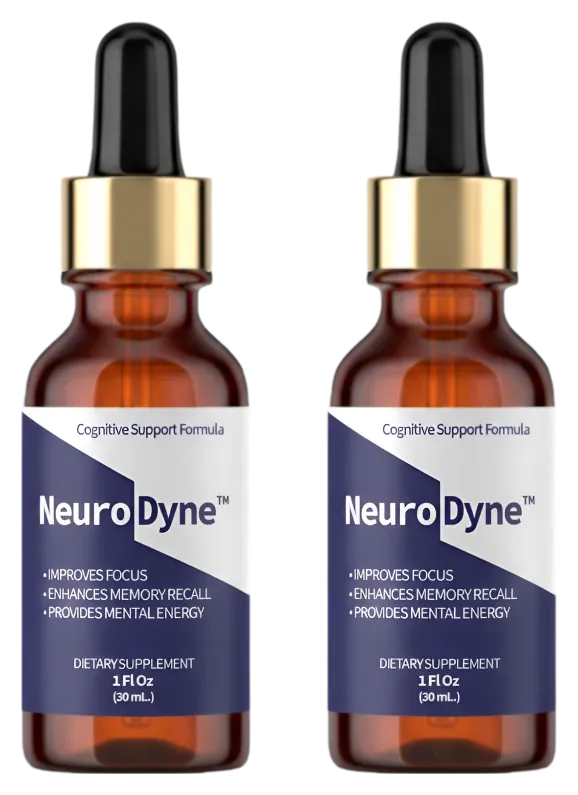
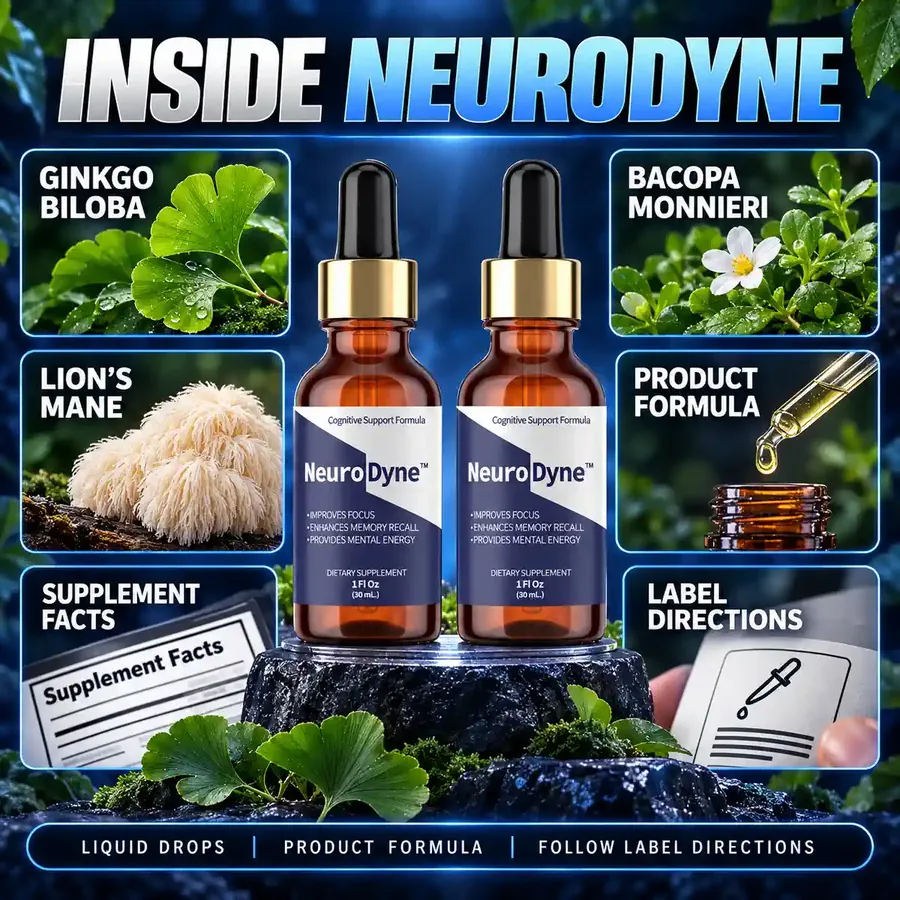
The amount is not published. Ginkgo is named in the sales FAQ and on the Inside NeuroDyne graphic, but no Supplement Facts panel appears on the sales page or in any bottle image. Ask the maker for the milligrams per serving.
Is ginkgo safe with warfarin or daily aspirin?
Ask your doctor first. NCCIH warns ginkgo may raise bleeding risk when combined with blood thinners such as warfarin. Because NeuroDyne names ginkgo, the same caution applies to the drops. Bring the bottle to your prescriber so they can read the label.
Should I stop ginkgo before surgery?
Tell your surgeon about it well before the date. Ginkgo may raise bleeding risk, so people with surgery planned should ask before taking any product that contains it, NeuroDyne included. Follow the timing your surgical team gives you.
Can ginkgo drops prevent Alzheimer's?
No study shows that. The GEM trial found ginkgo did not lower dementia or Alzheimer's rates over about 6 years. NeuroDyne is a dietary supplement, not a treatment for any disease. Memory loss that is new or getting worse needs a doctor's visit.
Why is ginkgo still sold for memory after the GEM trial?
FDA does not approve dietary supplements for safety or effectiveness before they are sold. Makers may use general memory wording if the label carries the standard not-evaluated statement. The bottle's claims are the maker's words, not a finding from GEM.
Is ginkgo biloba in NeuroDyne drops?
Yes. Ginkgo biloba is one of three herbs named in the NeuroDyne sales FAQ, with Bacopa monnieri and lion's mane. The amount of ginkgo is not published, so it cannot be compared with trial doses.
Does the GEM trial mean NeuroDyne will not help my memory?
Not exactly. The GEM trial tested ginkgo alone at 120 mg twice daily, not NeuroDyne. It shows ginkgo did not protect memory in that group, and no study of NeuroDyne exists to say more.
Who wrote this
Written and reviewed by
Plain-language pages built from the bottle images, the sales page and linked public health sources such as NIH, FDA and Cochrane.
Page revised . Read our editorial standards and the way we check reviews. This website is run by Neurodynesupport, a U.S. stocking partner for NeuroDyne, not by the manufacturer. We are paid a commission when you buy through our order links.
Keep reading
More about NeuroDyne
Ginkgo biloba
The best-known memory herb, and the one with the largest negative trial. Amount in NeuroDyne: not published.
Read more
Side effects
Stomach upset, bleeding risk and mushroom allergy: what NeuroDyne's three herbs can cause and who should check first.
Read moreWho it's for
A quick fit check, the situations that call for a doctor first, and tips for buying for a parent.
Read moreU.S. stocking partner for NeuroDyne
Ready to try NeuroDyne?
Pick a pack. Check your bottle's directions first; each pack lasts through the full 60-day window.
- Secure checkout
- 60-day money-back window
- Tracking in the order email