U.S. stocking partner
Regulation
Does NeuroDyne Have FDA Approval? What the Badge Means and the Law Says
No. Dietary supplements do not go through FDA approval before sale, so Neuro Dyne has none. A badge on the sales page hints otherwise, and it can mislead. Five facts below cover the law, the badges, the testing that is public and the testing that is not.
Written by the NeuroDyne editorial team · Medically reviewed by Dr. Kellyann Niotis, MD, PhysicianReviewed · Updated · 8 min read
What are the key facts at a glance?
Key facts
- Before sale, the FDA gives dietary supplements no approval for safety or effectiveness.
- NeuroDyne is sold as a dietary supplement rather than a drug, and it is not meant to diagnose, treat, cure or prevent any disease.
- The sales page carries a badge styled like FDA approval. On its face, that is misleading.
- A facility registration number does not show that the FDA approved or endorsed the facility or its products.
- No independent lab report is public. The lot and CoA codes are seller reference codes, not lab proof.
- Nobody has published a study of NeuroDyne itself.
NeuroDyne is a dietary supplement. It is not FDA approved, and no supplement is. It is not meant to diagnose, treat, cure or prevent any disease. Take medical questions to your doctor or pharmacist.
Fact 1: Does the FDA approve dietary supplements?
No. The FDA can approve drugs, but it does not sign off on supplements for safety or effectiveness before they reach shelves (FDA, Using supplements) (FDA, Supplement Q&A). The maker carries the duty of keeping the product safe and the label honest.
That makes the question a trap. No supplement is FDA approved, NeuroDyne included. When a bottle or a page says one is, the claim cannot be true. A better question is what the label says and who has checked it.
Fact 2: What is the badge on the sales page?
The sales page displays an FDA Approved badge, styled to look like a stamp of approval. Since no supplement can hold that approval, the badge misleads, whatever the intent behind it.
We do not reuse the badge. We state plainly that NeuroDyne is not FDA approved. Notice where you meet the claim, and if an ad repeats it, ask why.
NeuroDyne is a dietary supplement and is not a drug. These statements have not been evaluated by the Food and Drug Administration, and the product is not intended to diagnose, treat, cure or prevent any disease.
Fact 3: What does a registered facility badge mean?
Less than it appears to. The brand's artwork includes a registered facility roundel, but a registration number is not approval. Under federal rules, being assigned one does not signal that the FDA approved or endorsed a facility or its products (21 CFR 1.242).
| Badge | What is missing |
|---|---|
| Good Manufacturing Practice | No named certifier, facility or audit report |
| Registered facility | Registration is not FDA approval |
| Made in USA | No factory or city shown |
| Natural ingredients | The complete ingredient list is unpublished |
| Non-GMO | No named certifier |
| Money-back guarantee | A rule about buying, not a result |
Fact 4: Is NeuroDyne third-party tested?
No test is public. There is no certificate of analysis, purity report or lab seal that names a lab. That does not prove nobody ever ran a test. It means you have no way to read one.
The seller quotes a lot reference, ND-26/NE-4315, and a CoA reference, ND-4315-26-NE. These serve for matching orders. They do not report potency, purity or contaminants, and there is no online lookup.
| Document | What it would reveal | Status |
|---|---|---|
| Supplement Facts panel | Serving, herb amounts, other ingredients | Not online; look at your bottle |
| Certificate of analysis | Lab results for one lot | A reference code only |
| Third-party certification | An outside mark you can look up | No certifier named |
| Clinical study of the drops | Whether the formula helps | None exists |
You can ask for the lab document. Email [email protected] and request the certificate for your lot, including the name of the lab.
Fact 5: Who checks the claims, then?
Advertising falls to the FTC. It looks for competent, reliable science behind a health claim, typically trials in people of the product itself or a near-identical formula (FTC, Health claims). The FDA warns about unproven memory and Alzheimer's products, and some sold with disease claims have drawn warning letters (FDA, Unproven Alzheimer's products).
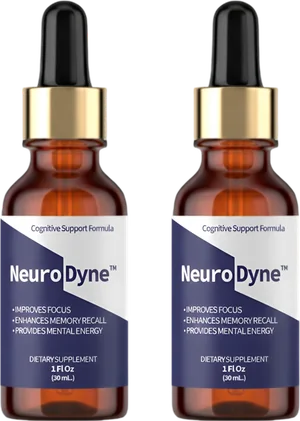
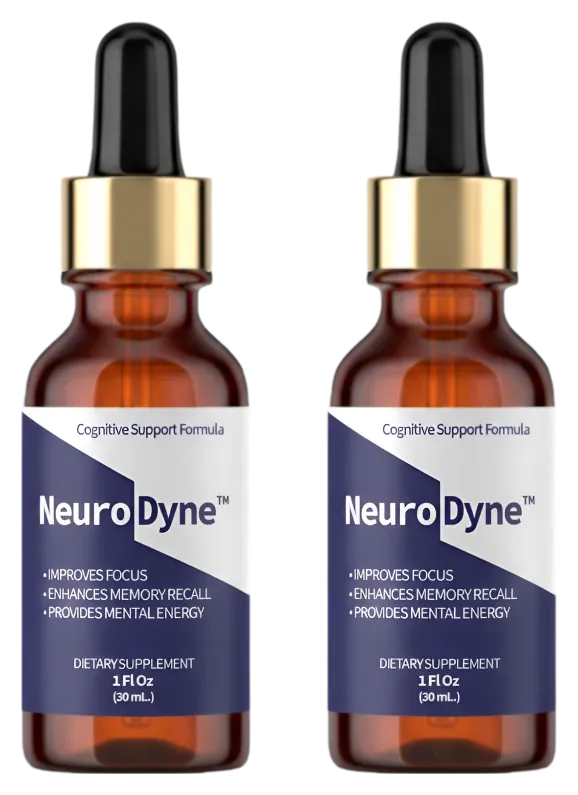
NeuroDyne's bottle claims are modest: improves focus, enhances memory recall, provides mental energy. They are structure-function claims, and the FDA does not review those before sale. That leaves you, your doctor and a few public rules as the real checks.
What should the NeuroDyne label show, then?
A Supplement Facts panel, with the serving size and per-serving amounts, is required on all supplements (FDA, Labeling guide) (21 CFR 101.36). NeuroDyne's front label can be seen online, while the panel cannot. Read it on your own bottle and photograph it for your doctor or pharmacist.
Talk with your doctor first if your routine includes a blood thinner, aspirin, or seizure, diabetes, mood or memory medicine. NeuroDyne names ginkgo, bacopa and lion's mane, and it is sold to adults 18 and over.
Is NeuroDyne a medical product?
No. It is a supplement. It does not treat dementia, Alzheimer's disease or ADHD, and it is not a drug. Memory loss that is new or getting worse has causes a doctor can look for (MedlinePlus, Memory loss). If confusion or slurred speech appears out of nowhere, treat it as an emergency and dial 911.
Which sources back this article?
- Information for Consumers on Using Dietary Supplements. U.S. Food and Drug Administration, 2022.The FDA does not approve supplements for safety and effectiveness before they are sold.
- Questions and Answers on Dietary Supplements. U.S. Food and Drug Administration, 2026.The FDA has no authority to approve supplements before they reach the market.
- 21 CFR 1.242: What does assignment of a registration number mean?. Electronic Code of Federal Regulations, 2026.A registration number does not mean FDA approval or endorsement of a facility or its products.
- Health Products Compliance Guidance. Federal Trade Commission, 2022.Health claims should rest on competent and reliable science, usually human trials of the product or an equivalent formula.
- Unproven Alzheimer's Disease Products. U.S. Food and Drug Administration, 2018.Warning letters named more than 58 products, and such products may delay a proper diagnosis.
- Dietary Supplement Labeling Guide: Chapter IV. Nutrition Labeling. U.S. Food and Drug Administration, 2005.Every supplement carries a Supplement Facts panel. A proprietary blend lists only its total weight.
- 21 CFR 101.36: Nutrition labeling of dietary supplements. Electronic Code of Federal Regulations, 2026.Sets out the serving size, the amount per serving and how blends are listed.
- Memory loss. MedlinePlus Medical Encyclopedia, 2025.Causes range from low B12, medicines and alcohol to depression, stroke and dementia.
Product, price, guarantee and contact facts come from the bottle images, the sales page (checked October 11, 2026) and this site's own pages. Anything not published there is marked as not published.
Who wrote this
Who wrote and reviewed this page?
Plain-language pages built from the bottle images, the sales page and linked public health sources such as NIH, FDA and Cochrane.
Page revised . Read our editorial standards and the way we check reviews. This website is run by Neurodynesupport, a U.S. stocking partner for NeuroDyne, not by the manufacturer. We are paid a commission when you buy through our order links.
Frequently asked questions
Is NeuroDyne approved by the FDA?
No, and none of its kind can be. Supplements are not approved by the FDA before sale. The sales page badge that hints at approval is misleading.
Is NeuroDyne checked by the FDA before sale?
No. Before reaching the market, supplements get no FDA ruling on safety or effectiveness. Responsibility for safety and honest labels rests with the maker.
Is NeuroDyne third-party tested?
No independent lab report is public. The brand's badges name no certifier, and the lot and CoA codes are seller reference codes. Ask the maker for a certificate of analysis that names the lab.
What does the registered facility badge mean?
It is brand artwork. A registration number does not show that the FDA approved or endorsed a facility or its products.
Is NeuroDyne a drug or a medical device?
Neither. It is a supplement taken as liquid drops, and it is not meant to diagnose, treat, cure or prevent any disease.
Where is the NeuroDyne Supplement Facts label?
Not in the images or on the sales page, as far as we found on October 11, 2026. Look at the back of your bottle; the maker can send it on request.
Does the NeuroDyne FDA registered badge mean the drops are approved?
No. A registered facility badge is not product approval, and supplements are not approved by the FDA before sale. The badge says nothing about whether the drops work.
Where can I verify NeuroDyne testing claims?
Ask the maker named on the sales page, NeuroDyne Research, for a lab report. The sales page and images do not publish one, and no certifier is named, so testing claims cannot be checked from the site alone.
Our view
The right way to read a supplement is without the word approved. Nobody approves it first. What you can ask for is clarity: a full label, amounts, a lab report and plain claims.
NeuroDyne gives clear prices and terms and a modest list of claims. It does not yet give amounts, a named lab or a product study, and its sales page uses a badge that creates the wrong impression. We think a careful buyer should know both facts.
Do not let any badge decide for you. Read the back panel, and ask your doctor if you take medicine.
Last updated November 11, 2026. Medically reviewed October 16, 2026 by Dr. Kellyann Niotis, MD, Physician.