U.S. stocking partner
Fact check
Is NeuroDyne Endorsed by Bill Gates or Dr Attia? 5 Checks on Scam Ads
Search suggestions pair NeuroDyne with famous names such as Bill Gates and Dr Attia, but nothing in the bottle images, the sales page or our sources shows that any celebrity or doctor endorses it. Use these five checks on any ad, video or post that says otherwise.
Written by the NeuroDyne editorial team · Medically reviewed by Dr. Kellyann Niotis, MD, PhysicianReviewed · Updated · 8 min read
What are the key facts at a glance?
Key facts
- No celebrity, billionaire or doctor is named as an endorser on the bottle front or in our sources.
- The sales page shows an FDA approval style badge, but the FDA does not approve dietary supplements.
- No study of NeuroDyne exists, so “clinically proven” has nothing behind it.
- No customer review has been verified on this site. We show no star score or quotes.
- An FTC rule outlaws fake and AI-generated testimonials.
- On this site, a physician reviews the page text. That is not an endorsement of the product.
NeuroDyne is a dietary supplement. It is not FDA approved, and no supplement is. It is not meant to diagnose, treat, cure or prevent any disease. Take medical questions to your doctor or pharmacist.
Check 1: Does the product's own material name the endorser?
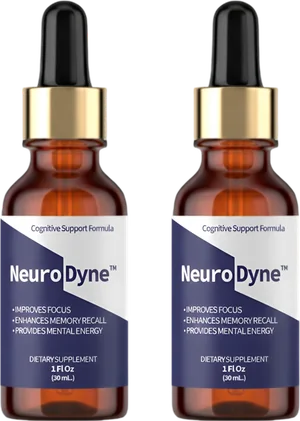
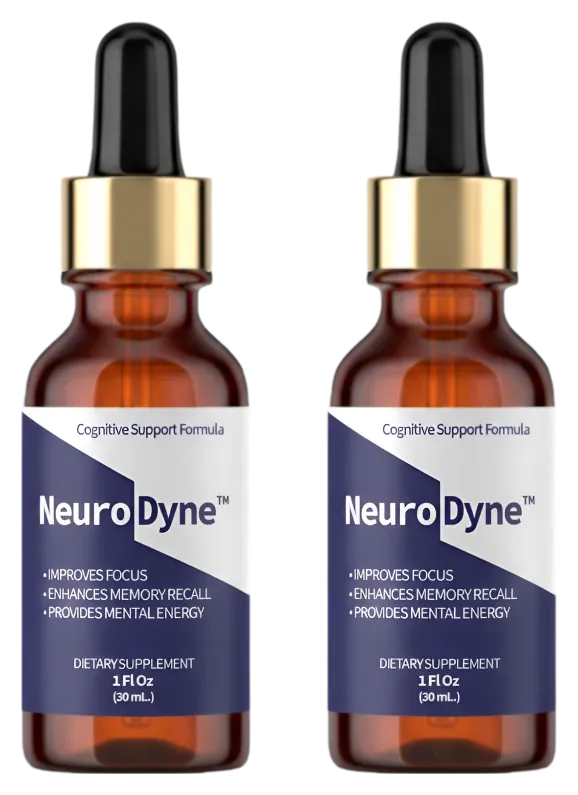
Start at the source. The bottle front shows the brand name, the Cognitive Support Formula line, three claims, the words dietary supplement and the 1 fl oz (30 mL) size. It names no person.
The sales page and our sources name the seller, NeuroDyne Research, and no other face. If someone says a famous person stands behind NeuroDyne, the product's own material should say so first. It does not.
| Claim you may see | What the sources show |
|---|---|
| Bill Gates uses or backs NeuroDyne | Nothing in our sources links him to the product |
| Dr Attia or Peter Attia recommends it | Nothing in our sources links him to the product |
| Doctor approved or doctor endorsed | No doctor is named as an endorser |
| FDA approved | The FDA does not approve dietary supplements |
| Clinically proven | No study of NeuroDyne exists |
| Thousands of five-star reviews | No review has been verified on this site |
Check 2: Can you trace the quote to a real source?
A real endorsement has an address. It points to an interview, a signed statement or a page the person controls. A fake one has a screenshot, a cropped video or a headline with no link.
Ask three plain questions. Where did this person say it, in what words, and on what date? If the post cannot answer, treat it as made up. The FTC finalized a rule in 2024 that bans fake and AI-generated testimonials and allows civil penalties (FTC, Fake reviews rule).
Check 3: Does the page behave like an ad pretending to be news?
Pushy ads, including ones dressed up as news, tend to share a few habits. Learn them and you will spot many.
- A headline that says a famous person “exposed” or “revealed” a memory secret
- A timer, a countdown or a line about stock running out
- A star score with no way to see who gave it
- A promise to reverse memory loss in days. The FDA warns against lines like this (FDA, False promises)
- No Supplement Facts panel, only big claims
NeuroDyne's own bottle makes smaller claims than these ads do. It says focus, memory recall and mental energy. It does not claim to treat dementia, Alzheimer's disease or ADHD.
Check 4: Is a doctor's name being used, and what does it really mean?
Doctor language is powerful, so test it. A doctor reviewing the words on a page is one thing. A doctor choosing, using or recommending a product is another. Only the second is an endorsement.
On this site, the medical reviewer is Dr. Kellyann Niotis, MD, Physician. That role covers the page text. It is not a study of NeuroDyne, and it is not a recommendation to buy it. If you want a doctor's view on the drops, ask your own doctor or pharmacist, and bring the bottle.
The FDA warns that unproven memory products can delay a proper diagnosis (FDA, Unproven Alzheimer's products). A famous name should never be a reason to skip an appointment.
Check 5: Does the story go beyond what the bottle claims?
Compare every story with the bottle. If the bottle says improves focus and the ad says cures forgetting, the ad has gone too far. If the ad shows a before and after, ask who the person is and how anyone measured memory.
Also check the evidence. In bacopa trials of at least 12 weeks, attention speed improved slightly (Kongkeaw et al., 2014). The largest ginkgo trial found no effect on dementia (DeKosky et al., 2008). Lion's mane trials were small and mixed (LiverTox, Lion's mane). No trial exists for NeuroDyne. A famous name cannot change those facts.
If you already paid through a suspicious ad, call the order desk at +1 (302) 200-3480 with your order ID. Do not give card details to any page that reached you through a pop-up.
What can be said with confidence about NeuroDyne?
- It is a liquid supplement sold in a 30 mL (1 fl oz) bottle.
- It names ginkgo biloba, Bacopa monnieri and lion's mane mushroom, without amounts.
- It is sold to adults 18 and over, with a refund window of 60 days shown on the sales page.
- It is not FDA approved, and no supplement is.
Which sources back this article?
- Federal Trade Commission Announces Final Rule Banning Fake Reviews and Testimonials. Federal Trade Commission, 2024.Bans fake and AI-generated reviews and testimonials and allows civil penalties.
- Watch Out for False Promises About So-Called Alzheimer's Cures. U.S. Food and Drug Administration, 2021.Be wary of claims such as reversing mental decline in just a week. Check with a doctor before using supplements.
- Unproven Alzheimer's Disease Products. U.S. Food and Drug Administration, 2018.Warning letters named more than 58 products, and such products may delay a proper diagnosis.
- Meta-analysis of randomized controlled trials on cognitive effects of Bacopa monnieri extract. Journal of Ethnopharmacology (via Epistemonikos), 2014.Nine trials with 518 people, each 12 weeks or longer. Small gains in speed of attention.
- Ginkgo biloba did not prevent dementia or Alzheimer disease in elderly people (summary of the GEM trial). Evidence-Based Nursing 12(2):56, summarizing JAMA 2008;300:2253, 2009.3,069 adults aged 75 and over took ginkgo or placebo for a median of 6.1 years. No difference in dementia.
- Lion's Mane. LiverTox, NIDDK (NCBI Bookshelf), 2024.Small trials with mixed results. Mild stomach complaints. Liver injury is unlikely.
Product, price, guarantee and contact facts come from the bottle images, the sales page (checked October 11, 2026) and this site's own pages. Anything not published there is marked as not published.
Who wrote this
Who wrote and reviewed this page?
Plain-language pages built from the bottle images, the sales page and linked public health sources such as NIH, FDA and Cochrane.
Page revised . Read our editorial standards and the way we check reviews. This website is run by Neurodynesupport, a U.S. stocking partner for NeuroDyne, not by the manufacturer. We are paid a commission when you buy through our order links.
Frequently asked questions
Does Bill Gates endorse NeuroDyne?
Nothing in the bottle images, the sales page or our sources shows that he does. Treat any ad that says so as unverified until it points to a statement he made himself.
Does Dr Attia recommend NeuroDyne?
We found no recommendation in our sources. If a page says a well-known doctor backs NeuroDyne, look for the original interview or statement. Without one, do not rely on it.
Is there a doctor endorsement of NeuroDyne?
No doctor is named as an endorser in our sources. A physician reviews the text of this site's pages. That is a check of the page, not a recommendation of the drops.
What are NeuroDyne scam ads?
They are ads that borrow famous names, fake news layouts or unverified star scores to sell the drops. We cannot say who runs a given ad. Compare each claim with the bottle front and the sales page.
Are NeuroDyne drops exposed in videos or posts?
Be careful with the word exposed. It often signals a click-bait headline. Ask what evidence the post shows, who wrote it and whether it is paid. We verify none of them.
Is NeuroDyne FDA approved?
No. Dietary supplements never get FDA approval before sale, so none can be called FDA approved. The badge on the sales page that hints at it misleads.
Is the NeuroDyne Bill Gates ad real?
We found nothing that shows Bill Gates endorses NeuroDyne. Ads that use famous names without proof deserve caution. Rely on the official sales page and the label, not on a video.
Where do I report a fake NeuroDyne ad?
Report it to the platform where you saw it, using its ad report option. For real order questions, call +1 (302) 200-3480. Never pay through a link that came from an unverified ad.
Our view
Famous names sell products because trust is quick and checking is slow. The checks above reverse that. They take a few minutes and they work on almost any ad.
For NeuroDyne, our sources name no endorser. We would not add one, and we would not ask you to believe one without a source. What the product offers is a bottle, a short claim list and a guarantee.
Judge it by what you can check. Read the label, ask your doctor and keep your own notes.
Last updated November 11, 2026. Medically reviewed October 16, 2026 by Dr. Kellyann Niotis, MD, Physician.