U.S. stocking partner
Step by step
Are NeuroDyne Reviews Real? Six Steps to Judge Complaints and Customer Stories
Search NeuroDyne reviews and you will meet very different stories. This site has verified no customer review yet, so it shows no stars, count or quotes. Six steps help you judge any review or complaint you find, then compare it with the studies of the three named herbs.
Written by the NeuroDyne editorial team · Medically reviewed by Dr. Kellyann Niotis, MD, PhysicianReviewed · Updated · 10 min read
What are the key facts at a glance?
Key facts
- This site has matched no NeuroDyne review to a real purchase, so it prints no star score, review count or customer quote.
- Before a review is posted here, the order desk must confirm the order and the buyer must agree to publication.
- A 2024 FTC rule bans fake and AI-generated reviews and testimonials.
- Pages on other sites, such as forums, Trustpilot or the BBB, are outside what we track or vouch for.
- Studies of the herbs, each taken alone, show small or mixed results. No study of NeuroDyne exists.
- Problems with an order or a refund go to the phone desk with your order ID.
NeuroDyne is a dietary supplement. It is not FDA approved, and no supplement is. It is not meant to diagnose, treat, cure or prevent any disease. Take medical questions to your doctor or pharmacist.
Step 1: Who is behind the page you are reading?
Start with the page itself. A review may sit on a store, a forum, a video, an ad or a site like this one. Each exists for a different reason.
Neurodynesupport runs this site. It keeps NeuroDyne in stock for U.S. buyers without producing it, and it earns a commission on orders placed through its links. We say so beside every buy button. If a page that praises NeuroDyne is silent about how it makes money, assume it makes money.
| Source | Useful for | Silent on |
|---|---|---|
| Star score inside an ad | Whatever the advertiser picked | Who gave the score, or whether they ever bought it |
| Forum thread | One person's account | Whether the drops caused a change |
| Trustpilot, BBB or Consumer Reports page | Service and billing complaints | We do not track these pages and cannot vouch for them |
| A review confirmed on this site | A genuine buyer's experience | None exist yet |
| Trial of a single herb | That herb against a placebo | How NeuroDyne's liquid mix behaves |
Step 2: Did the reviewer actually buy it?
This step sorts real from staged. In 2024 the FTC finalized a rule against fake and AI-generated reviews and testimonials, with civil penalties on the table (FTC, Fake reviews rule). The rule exists because fake praise had become common.
Here is how a review reaches this site. The BuyGoods order desk first checks that the order ID belongs to a genuine NeuroDyne purchase. Then the buyer gives consent. Our count of published reviews is zero, so every slot sits empty.
Elsewhere you may come across a high star score for NeuroDyne. We cannot trace it to named buyers, so we do not copy it. An empty slot is more honest than a figure nobody can test.
Step 3: How long did they use the drops?
Time matters more than tone. Every bacopa trial in the main review lasted 12 weeks or longer before measuring small gains in speed of attention (Kongkeaw et al., 2014). One bottle lasts about 30 days, so 12 weeks means roughly three bottles.
A review written after a few days describes the unboxing, not memory. One written after three months still cannot prove cause, but at least it spans the same stretch as the research.
- A few days to two weeks: a first impression.
- A month or two: good for stomach effects and routine, early for memory.
- 12 weeks or more: the nearest match to the bacopa trials.
Step 4: Is the reviewer describing the same product and the same claims?
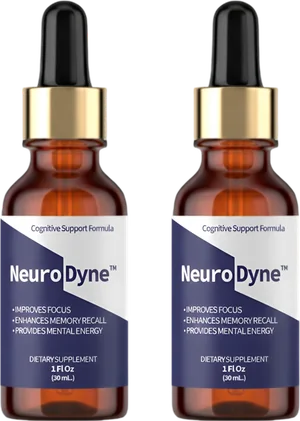
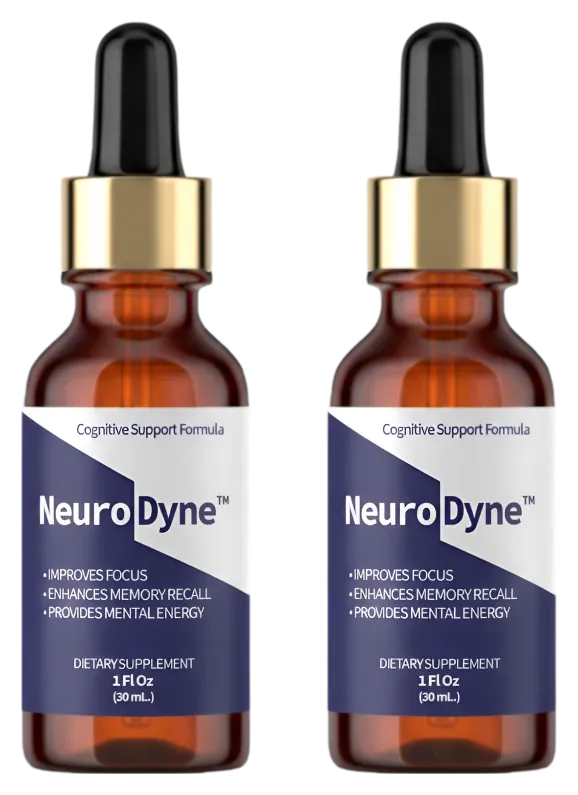
NeuroDyne comes as liquid drops in a 30 mL dropper bottle. A story about capsules, pills or gummies concerns another product. Our sources list only the drops.
Check the claims as well. The bottle promises better focus, memory recall and mental energy. It does not treat dementia, Alzheimer's disease or ADHD. A review that says the drops cured a condition is overreaching, and the FDA warns that such promises can hold up a proper diagnosis (FDA, Unproven Alzheimer's products).
Suppose a review quotes milligrams for a herb in NeuroDyne. Ask where the figure came from, because no amounts have been published.
Step 5: What kinds of complaints should you expect, and where do they go?
Complaints about products like this one tend to land in two bins: health effects and buying problems. Treat them differently.
On health effects, the named herbs have a known track record. Bacopa can loosen stools and bring on nausea or cramps (StatPearls, Bacopa). Ginkgo can cause dizziness, an upset stomach or headache, and it may add to bleeding risk when taken with blood thinners (NCCIH, Ginkgo). Lion's mane may cause mild stomach upset or a rash, and an allergy to mushrooms is a reason to avoid it (MSKCC, Lion's mane).
On buying problems, the usual suspects are a card statement showing another name, a parcel that stalls and a refund that has not posted. A third-party processor runs checkout, so the statement may show its name. The order desk can match a charge to your order. Call it before you dispute the charge with your bank.
| Problem | First contact |
|---|---|
| Tracking, a charge, a refund, a change to an order | Order desk, +1 (302) 200-3480, with your order ID |
| Questions about amounts or the formula | [email protected] |
| A typo or error on our pages | [email protected] |
| A reaction to the drops | Your doctor or pharmacist |
Step 6: How do reviews compare with real evidence?
Weigh every story against the studies. A review reports what one person felt. A trial sets a group taking the herb beside a group taking a placebo.
| Rung | What exists | Result |
|---|---|---|
| Bacopa | Nine trials, each at least 12 weeks long | A slight gain in attention speed at 300-450 mg a day |
| Lion's mane | Three small trials of 30 to 49 volunteers | Mixed; one saw gains fade after stopping (Mori et al., 2009) |
| Ginkgo | GEM trial of 3,069 volunteers, all 75 or older | No lower dementia rate over about 6 years (DeKosky et al., 2008) |
| NeuroDyne | No trial of the product | Unknown |
A rave review does not lift NeuroDyne up that ladder. Only a trial of the product, with its amounts published, would.
A word on the phrase “medical reviews”. On this site it means a physician checks the page text, and the pages name Dr. Kellyann Niotis, MD, Physician as the medical reviewer. That is a check of the page. It is not a study of the drops and not an endorsement.
What about reviews from Australia or other countries?
Shipping terms are published for the U.S. only, and the sales page leaves other countries unaddressed. If you live elsewhere, the order page shows whether your address is accepted. A buyer abroad may describe a shipping route we know nothing about, so read those reviews with that gap in mind.
Which sources back this article?
- Federal Trade Commission Announces Final Rule Banning Fake Reviews and Testimonials. Federal Trade Commission, 2024.Bans fake and AI-generated reviews and testimonials and allows civil penalties.
- Meta-analysis of randomized controlled trials on cognitive effects of Bacopa monnieri extract. Journal of Ethnopharmacology (via Epistemonikos), 2014.Nine trials with 518 people, each 12 weeks or longer. Small gains in speed of attention.
- Bacopa monnieri. Walker EA, Pellegrini MV. StatPearls (NCBI Bookshelf), 2023.Adult extract dose of 300-450 mg a day. Common side effects were more frequent stools, nausea and cramps.
- Ginkgo: Usefulness and Safety. National Center for Complementary and Integrative Health, 2025.Large studies did not show a lower dementia risk. Ginkgo may raise bleeding risk with blood thinners such as warfarin.
- Lion's Mane Mushroom. Memorial Sloan Kettering Cancer Center, 2024.Avoid it with a mushroom allergy. Nausea and skin rash have been reported.
- Improving effects of Hericium erinaceus on mild cognitive impairment: a double-blind placebo-controlled trial. Mori K, et al. Phytotherapy Research 23(3):367-372 (via FAO Agris), 2009.Test scores rose over 16 weeks, then fell 4 weeks after the capsules stopped.
- Ginkgo biloba did not prevent dementia or Alzheimer disease in elderly people (summary of the GEM trial). Evidence-Based Nursing 12(2):56, summarizing JAMA 2008;300:2253, 2009.3,069 adults aged 75 and over took ginkgo or placebo for a median of 6.1 years. No difference in dementia.
- Unproven Alzheimer's Disease Products. U.S. Food and Drug Administration, 2018.Warning letters named more than 58 products, and such products may delay a proper diagnosis.
- Lion's Mane. LiverTox, NIDDK (NCBI Bookshelf), 2024.Small trials with mixed results. Mild stomach complaints. Liver injury is unlikely.
Product, price, guarantee and contact facts come from the bottle images, the sales page (checked October 11, 2026) and this site's own pages. Anything not published there is marked as not published.
Who wrote this
Who wrote and reviewed this page?
Plain-language pages built from the bottle images, the sales page and linked public health sources such as NIH, FDA and Cochrane.
Page revised . Read our editorial standards and the way we check reviews. This website is run by Neurodynesupport, a U.S. stocking partner for NeuroDyne, not by the manufacturer. We are paid a commission when you buy through our order links.
Frequently asked questions
Are NeuroDyne reviews real?
Ratings and testimonials in ads cannot be verified by us, so we do not copy them. No review on this site has been tied to a confirmed purchase. A review goes up only after the order desk confirms the order and the buyer says yes.
What is the NeuroDyne star rating?
There is no verified rating. Any score you meet elsewhere is one we cannot check, and this site prints none. Our rating summary will fill in only from reviews tied to confirmed orders.
Are there NeuroDyne complaints on Trustpilot, the BBB or Reddit?
Those pages are beyond what we track, and we cannot vouch for them. Read each complaint as a single story. Ask whether it concerns health, billing or delivery, and whether the writer describes liquid drops.
Do NeuroDyne drops really work, according to customers?
Nothing verified from buyers exists yet to answer that. Stories cannot prove cause and effect anyway. Better evidence comes from research on the herbs, which is small or mixed, and nobody has published a study of NeuroDyne.
Is there a Consumer Reports review of NeuroDyne?
We know of none and cite none. Our sources for the herbs are NIH, FDA, Cochrane and published trials. For any outside review, check who wrote it and whether the writer was paid.
How can I leave a review of NeuroDyne?
Email [email protected] with your review, order ID, pack size and the number of days you used the drops. The order desk checks the purchase first, and nothing is posted without your consent.
Where can I read honest NeuroDyne customer reviews?
This site has verified none yet, so it shows no quotes. If you read reviews elsewhere, apply the six steps here and check each claim against the 1 fl oz bottle and the official prices.
How do I spot a fake NeuroDyne review?
Look for reviews with no order details, copied wording or promises the product cannot back. A review you can compare with the official facts is more useful than a star count alone.
Our view
The honest state of NeuroDyne reviews is an empty shelf. That can feel odd beside ads crowded with stars, but a score you cannot trace is worth nothing. We would rather show nothing than something fake.
If you read reviews elsewhere, run the six steps. Ask who is paid, whether the writer bought the product, how long they used it and whether the story claims what no supplement may claim. Most reviews will fail at least one of those tests.
After that, lean on the research and on your own notes. A short weekly log, kept through the 60-day window, gives you better data than any thread.
Last updated November 11, 2026. Medically reviewed October 16, 2026 by Dr. Kellyann Niotis, MD, Physician.